Introduction
The rapid evolution of technology has led to an exponential increase in data processing requirements. As a result, data centers are facing unprecedented thermal management challenges. The introduction of liquid-cooled designs in B300 racks has emerged as a pioneering solution, offering a method to efficiently manage heat in high-density environments. This article delves into the liquid-cooled design of B300 racks, outlining their advantages, operational efficiency, and future implications for data center management.
Understanding Thermal Management in Data Centers
Thermal management is critical in data centers to ensure optimal performance and longevity of IT equipment. Excessive heat can lead to hardware failures, reduced efficiency, and increased operational costs. Traditional air-cooling methods often fall short in high-density environments, where heat loads can be significantly high. Liquid cooling provides a viable alternative, offering improved thermal conductivity and heat removal capabilities.
The Need for Liquid Cooling
- Increased Power Density: With the advent of high-performance computing (HPC), the power density of servers has surged.
- Energy Efficiency: Liquid cooling systems can operate at higher temperatures, leading to reduced energy consumption.
- Reliability: Lower temperatures can enhance the reliability and lifespan of critical components.
The B300 Rack: An Overview
The B300 rack has been designed with a focus on modularity and scalability, making it ideal for modern data centers. The incorporation of liquid cooling technology in B300 racks enables them to manage high thermal loads efficiently. This section will explore the features and benefits of B300 racks.
Key Features of B300 Racks
- Modular Design: B300 racks can be configured to meet varying operational needs, allowing for easy upgrades and scaling.
- Enhanced Cooling Capabilities: The liquid cooling system is integrated within the rack, ensuring effective heat dissipation.
- Space Optimization: By utilizing liquid cooling, B300 racks reduce the footprint required for cooling systems.
Liquid-Cooled Design Explained
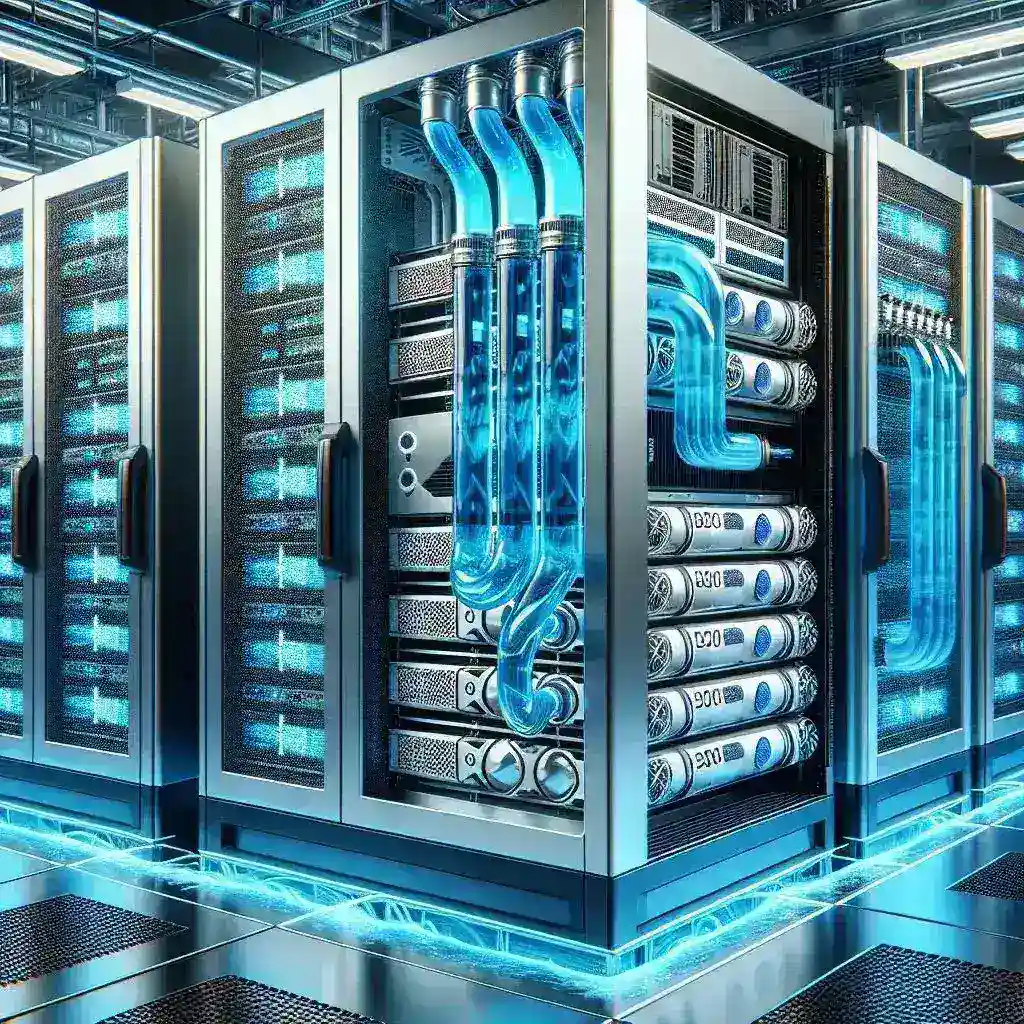
The liquid-cooled design of B300 racks employs a closed-loop system where coolant circulates through the rack, absorbing heat from the components and transferring it away. This section will provide a detailed analysis of how this system operates.
Components of the Liquid-Cooling System
- Coolant Reservoir: Stores the coolant used in the cooling process.
- Heat Exchangers: Facilitate the transfer of heat from the rack to the coolant.
- Pumps: Circulate the coolant throughout the system.
- Cooling Distribution Units (CDUs): Manage the flow of coolant to different areas of the rack.
Operational Mechanism
The operation begins with the coolant absorbing heat from the electronic components, which is then transferred to the heat exchangers. From there, the heated coolant is pumped to the cooling units where the heat is dissipated, and the cooled liquid returns to the rack. This efficient heat exchange mechanism significantly lowers the temperature of critical components.
Advantages of Liquid-Cooled B300 Racks
Implementing a liquid-cooled design in B300 racks offers numerous advantages, particularly in enhancing thermal management.
Improved Energy Efficiency
Liquid cooling systems operate at higher temperatures than traditional air-cooling systems, which can lead to a decrease in energy costs. According to studies, using liquid cooling can reduce energy usage by up to 30% or more.
Reduced Cooling Infrastructure Costs
By eliminating the need for extensive air-conditioning systems, the overall cooling infrastructure costs can be significantly lowered. Liquid-cooled B300 racks require less physical space and enable higher rack densities.
Optimized Performance
Maintaining lower temperatures ensures optimal performance of the hardware components, reducing the risk of thermal throttling and improving reliability.
Challenges and Considerations
While the advantages of liquid-cooled designs are significant, several challenges must be considered.
Initial Investment
The initial setup cost for liquid cooling systems may be higher than traditional air-cooling systems. However, this can be offset by long-term savings from energy efficiency and reduced operational costs.
Maintenance Requirements
Liquid cooling systems require regular maintenance to prevent leaks and ensure the proper functioning of pumps and heat exchangers.
Future Trends in Liquid Cooling
The future of liquid cooling in data centers looks promising, with ongoing innovations aimed at enhancing efficiency and sustainability.
Integration with Renewable Energy
As organizations strive to reduce their carbon footprint, integrating renewable energy sources with liquid cooling systems can lead to sustainable data center operations.
Advanced Cooling Technologies
Emerging technologies, such as immersion cooling, are being developed to further optimize heat management in B300 racks and similar systems.
Conclusion
The liquid-cooled design of B300 racks represents a significant advancement in thermal management solutions for modern data centers. With their remarkable efficiency, scalability, and potential for cost savings, these racks are poised to lead the way in the evolution of data center cooling technologies. As businesses continue to navigate the challenges of high-density computing environments, embracing innovations like the B300’s liquid cooling system will be essential for achieving optimal operational performance.